Mobile crushing plant setup for basalt: jaw, cone, VSI configuration to produce high-quality 0–20 mm aggregates efficiently.
Which Mobile Crushing Plant Configuration Can Produce 0–20 mm Aggregates From Basalt?
Basalt is one of the hardest and most durable stones used in construction. Many contractors choose basalt aggregates for highways, concrete production, airport runways, and railway ballast. However, crushing basalt into high-quality aggregates—especially the commonly required 0–20 mm size—is not always easy. Basalt has high compressive strength and strong abrasiveness. Therefore, selecting the right mobile crushing plant configuration becomes critical for efficiency, product quality, and operating cost.
Many contractors ask a practical question before investing in equipment: which mobile crushing plant configuration can reliably produce 0–20 mm basalt aggregates? The answer depends on several factors such as raw material size, project scale, required capacity, and final aggregate applications. In this article, we will explore suitable mobile crushing solutions, recommended equipment combinations, and practical considerations that help contractors produce high-quality basalt aggregates efficiently.
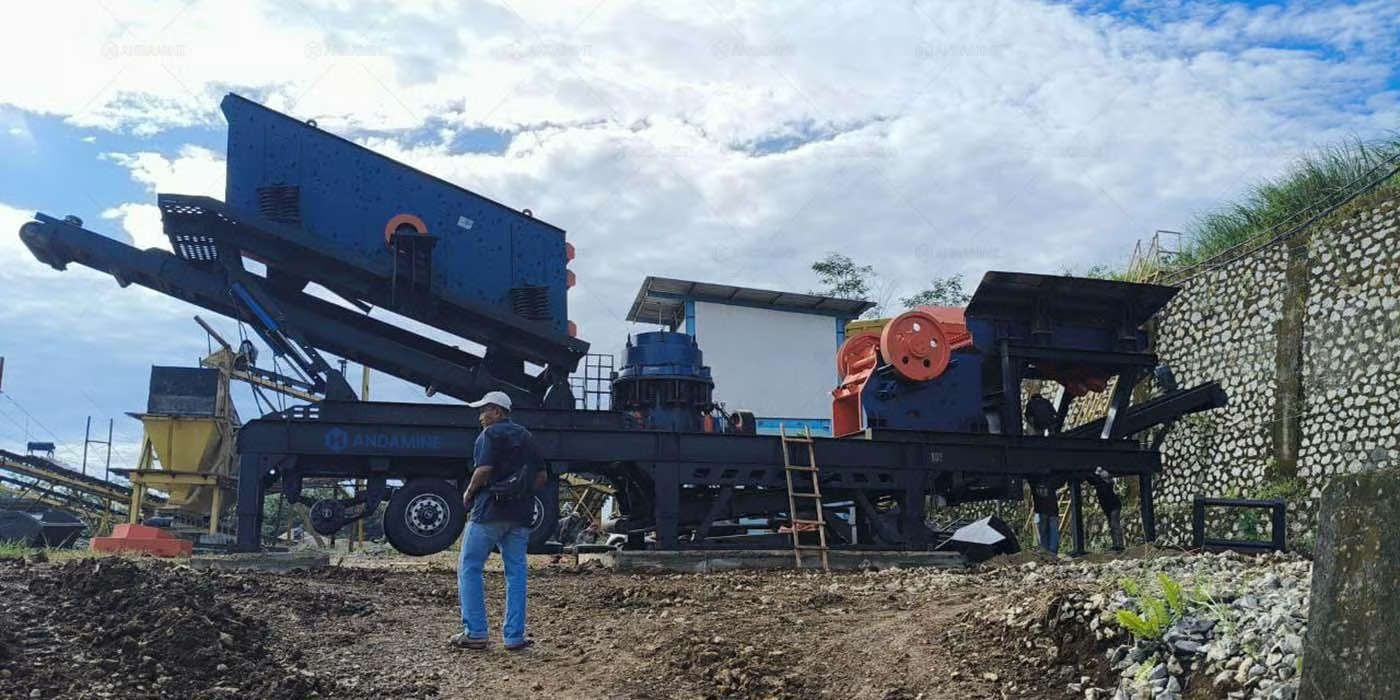
Why Basalt Requires A Strong Crushing Configuration
Before selecting a crushing plant, it is important to understand the characteristics of basalt. These characteristics directly influence the equipment configuration and the crushing stages required.
Basalt usually has a compressive strength of 200–300 MPa. In addition, it contains hard minerals that increase wear on crushing parts. Because of this, a simple crushing setup may struggle to produce consistent 0–20 mm aggregates.
For this reason, most successful basalt processing lines use multi-stage crushing. Typically, contractors use a combination of jaw crushers, cone crushers, and vertical shaft impact crushers. Each machine performs a specific role. Together they create the desired particle size and shape.
Now that we understand the material challenges, let's examine the recommended mobile crushing configurations that can handle basalt effectively.
Recommended Mobile Crushing Plant Configuration For 0–20 mm Basalt
In most quarry or construction scenarios, a three-stage mobile crushing configuration delivers the best results for basalt processing. This setup provides strong crushing power, flexible mobility, and stable aggregate quality.
Primary Crushing: Mobile Jaw Crusher
The first step involves breaking large basalt rocks into smaller pieces. A mobile jaw crusher performs this task efficiently. It handles feed sizes up to 500–700 mm and reduces them to about 100–150 mm.
Contractors often choose a mobile jaw crusher with a capacity of 80–150 TPH for medium-scale projects. This machine provides strong compression force and stable performance. More importantly, the jaw crusher prepares the material for the next crushing stage.
Once the basalt reaches a manageable size, the material moves to secondary crushing for further reduction.
Secondary Crushing: Mobile Cone Crusher
After primary crushing, the basalt enters a mobile cone crusher. This stage plays a key role in producing uniform aggregates. Cone crushers work well with hard rocks such as basalt because they provide continuous compression and excellent wear resistance.
Typically, the cone crusher reduces the material from around 100 mm to 20–40 mm. Many contractors select a cone crusher with a capacity of 100–200 TPH. This capacity ensures smooth production and prevents bottlenecks in the crushing process.
At this stage, the material becomes much smaller. However, it still needs shaping and fine crushing to achieve high-quality 0–20 mm aggregates. Therefore, a third stage is usually recommended.
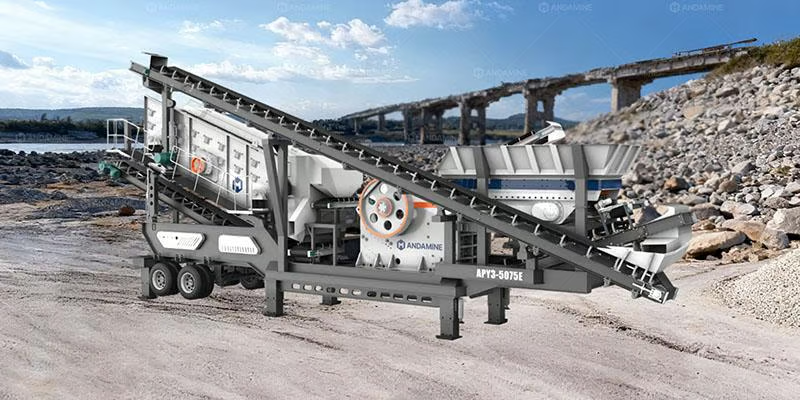
Tertiary Crushing: Mobile VSI Crusher For Aggregate Shaping
To produce high-quality 0–20 mm aggregates, contractors often add a vertical shaft impact (VSI) crusher. This machine improves particle shape and generates fine aggregates.
Unlike compression crushers, the VSI crusher uses high-speed impact. The material collides with the crushing chamber and breaks along natural fracture lines. As a result, the final aggregates have better cubic shape, which is ideal for concrete and asphalt production.
With a properly adjusted VSI crusher, the plant can efficiently produce 0–5 mm sand and 5–20 mm aggregates. These products meet the requirements of many infrastructure projects.
Typical Mobile Crushing Plant Layout
After understanding the individual machines, it becomes easier to visualize the full crushing process. A typical mobile stone crusher plant for basalt may include the following configuration:
Example Configuration For 100–150 TPH Production
Primary Unit: Mobile Jaw Crusher (Feed Size ≤ 600 mm) Secondary Unit: Mobile Cone Crusher Tertiary Unit: Mobile VSI Crusher Screening Unit: Mobile Vibrating Screen Output Products: 0–5 mm, 5–10 mm, 10–20 mm aggregates
In addition, the vibrating screen separates materials into different sizes. Oversized particles return to the crusher for further crushing. This closed-circuit system improves efficiency and ensures stable aggregate grading.
Because all units are mobile, contractors can move the plant closer to the quarry face or construction site. This mobility reduces transportation costs and increases operational flexibility.
Applications Of 0–20 mm Basalt Aggregates
Producing 0–20 mm basalt aggregates creates many opportunities in the construction industry. Contractors often supply these aggregates to different infrastructure projects.
Concrete Production
Many ready-mix concrete plants require 5–20 mm basalt aggregates. Basalt offers excellent compressive strength and durability. Therefore, it improves the structural performance of concrete structures.
Asphalt Mixing Plants
Basalt aggregates are also widely used in asphalt mixtures. Their hardness and skid resistance make them ideal for highways and airport runways. As a result, many road contractors prefer basalt aggregates for pavement construction.
Road Base And Railway Construction
In addition, 10–20 mm basalt aggregates often serve as base materials for road and railway construction. These aggregates provide strong load-bearing capacity and long service life.
Because of these wide applications, many quarry operators invest in mobile crushing plants that can produce multiple aggregate sizes efficiently.
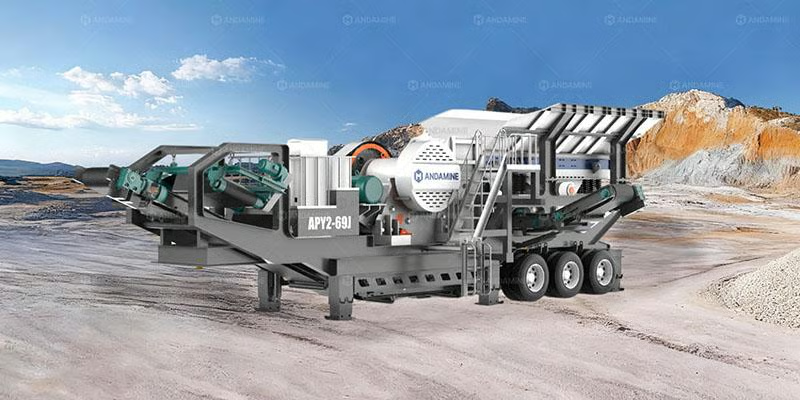
Key Factors When Choosing A Mobile Basalt Crushing Plant
Although the recommended configuration works in many cases, contractors should still evaluate several project-specific factors before making a final decision.
Required Production Capacity
First, determine the daily or hourly production requirement. Small infrastructure projects may only need 80–100 TPH, while commercial aggregate suppliers may require 200 TPH or more.
Raw Material Size
Second, check the maximum basalt rock size at the quarry. Larger feed sizes require stronger primary crushers.
Final Aggregate Specification
Finally, consider the exact aggregate sizes required by the project. Some projects may require additional sand production or stricter particle shape standards.
By analyzing these factors carefully, contractors can choose a plant crusher machine configuration that balances performance, cost, and long-term reliability.
Build A More Efficient Basalt Crushing Operation
Producing 0–20 mm basalt aggregates requires the right equipment combination and a well-designed crushing process. In most cases, a mobile jaw crusher, cone crusher, and VSI crusher working together provide an efficient and reliable solution. This configuration handles hard basalt, ensures consistent particle size, and improves aggregate shape for demanding construction applications.
If you are planning a quarry project or supplying aggregates for infrastructure construction, selecting the right mobile crushing plant is an important step. A properly configured plant can increase productivity, reduce operating costs, and deliver high-quality aggregates that meet market demand.
If you would like to explore a suitable mobile crushing plant configuration for your basalt project, feel free to contact our team. Share your raw material size, required capacity, and final aggregate specifications. Our engineers will help you design a customized crushing solution that fits your project and maximizes your production efficiency.
Indonesia mobile crushing plant
Articles similaires

What Is The Best Mobile Crushing Plant Solution For Remote Island Projects In Indonesia?
Remote island projects in Indonesia face high logistics and material challenges. Learn the best mobile crushing plant solutions for efficient on-site aggregate production, lower costs, and reliable performance in remote and difficult conditions.


