
Need 1,000 m³ of crushed limestone per month for road base projects? Discover how to choose the right jaw crusher capacity and boost your project efficiency with AIMIX.
What Jaw Crusher Capacity Should I Choose if I Need 1,000 m³ of Crushed Limestone per Month for Road Base Projects?
Choosing the right jaw crusher capacity is critical for any road construction project. If your goal is to produce 1,000 m³ of crushed limestone per month, the selection can significantly impact your operational efficiency, costs, and project timeline. In this post, we will break down the key factors to help you make a smart decision about mesin jaw crusher.
Understanding Your Monthly Production Requirement
Before selecting a jaw crusher, you must clearly understand your monthly production target. For road base projects, crushed limestone is often used as the foundation material. Producing 1,000 m³ per month means you need a crusher that can handle a consistent workload while maintaining quality.
Moreover, you should consider the number of working days per month. If you operate 20 days a month, your daily requirement will be approximately 50 m³. This number will help you determine the daily crushing capacity needed, which directly influences your choice of jaw crusher.
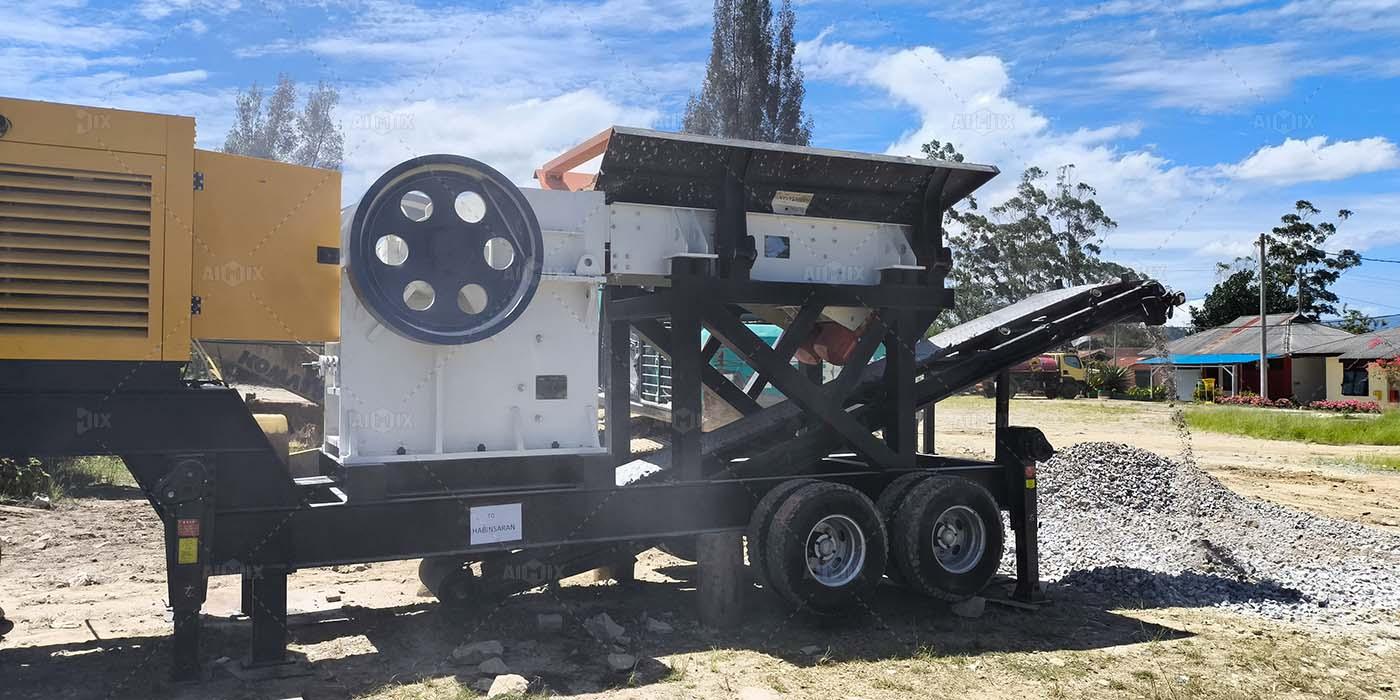
Calculating Jaw Crusher Capacity
Jaw crusher capacity is usually expressed in tons per hour (TPH). To convert your cubic meter requirement to tons, you need the material’s bulk density. Crushed limestone typically has a density of about 1.5–1.6 tons per m³. Therefore, producing 1,000 m³ per month equates to roughly 1,500–1,600 tons.
Dividing 1,500 tons by 20 working days gives about 75 tons per day. If your jaw crusher operates 8 hours per day, the required capacity is roughly 9–10 TPH. However, you should also account for operational downtime, maintenance, and material moisture. Therefore, a jaw crusher with a capacity of 15–20 TPH is usually safer and ensures stable production.
Factors Affecting Jaw Crusher Selection
1. Feeding Size
The maximum size of raw limestone your crusher can handle is critical. Larger feeding sizes require a more powerful crusher with a bigger jaw opening. AIMIX jaw crushers are designed to accommodate various feeding sizes while ensuring smooth operation.
2. Output Size
The road base often requires specific particle sizes, typically 0–40 mm. Choosing a jaw crusher that can provide the right output size reduces the need for additional screening or secondary crushing.
3. Workload and Operational Hours
Your daily operational hours affect the capacity requirement. If you can run the crusher longer each day, a slightly smaller capacity machine may suffice. Conversely, limited working hours require a higher capacity crusher to meet monthly targets.
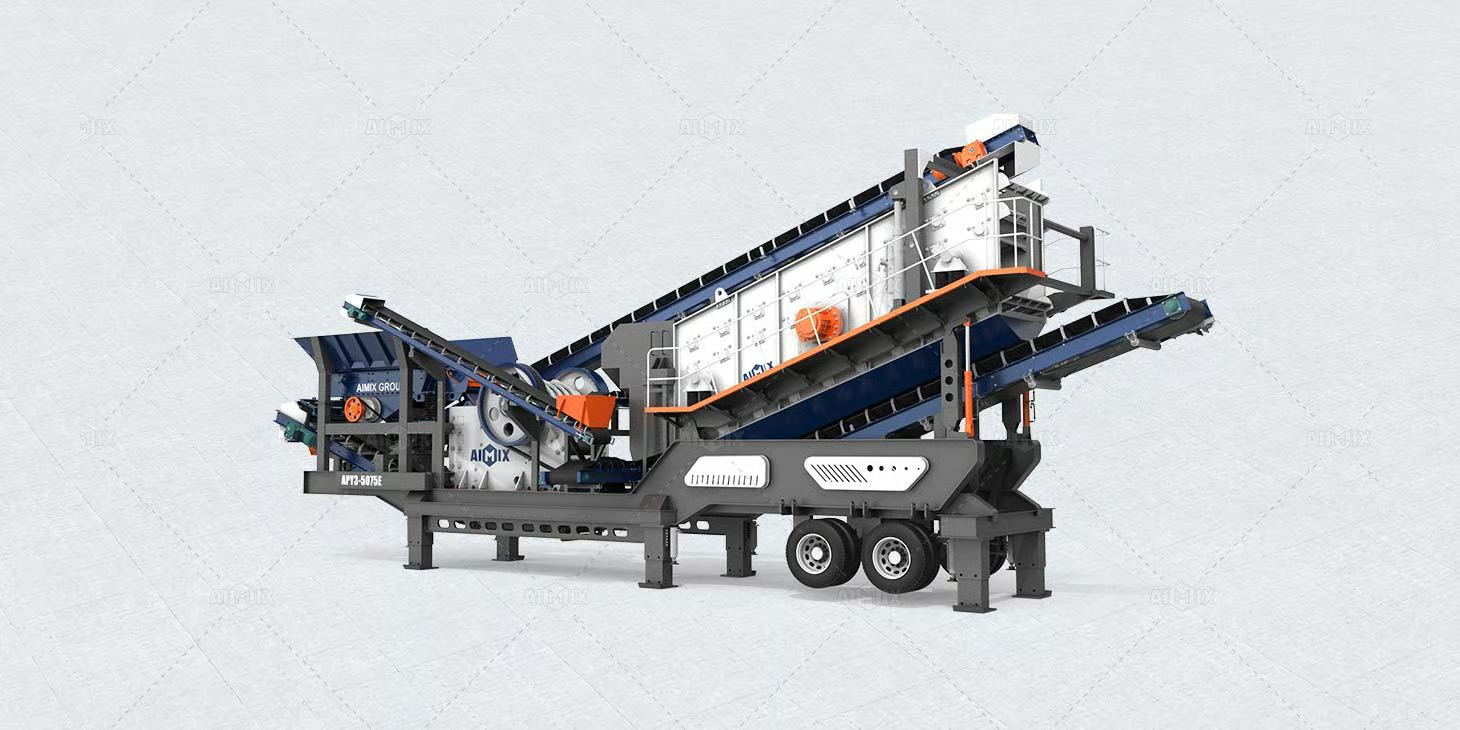
Advantages of Selecting the Right Jaw Crusher
Choosing a correctly sized jaw crusher has several benefits. Firstly, it minimizes downtime caused by overloading. Secondly, it ensures consistent particle size for high-quality road base. Finally, it reduces energy consumption and overall operating costs. The right choice directly affects your project efficiency and profitability.
Why AIMIX Jaw Crushers are a Smart Choice
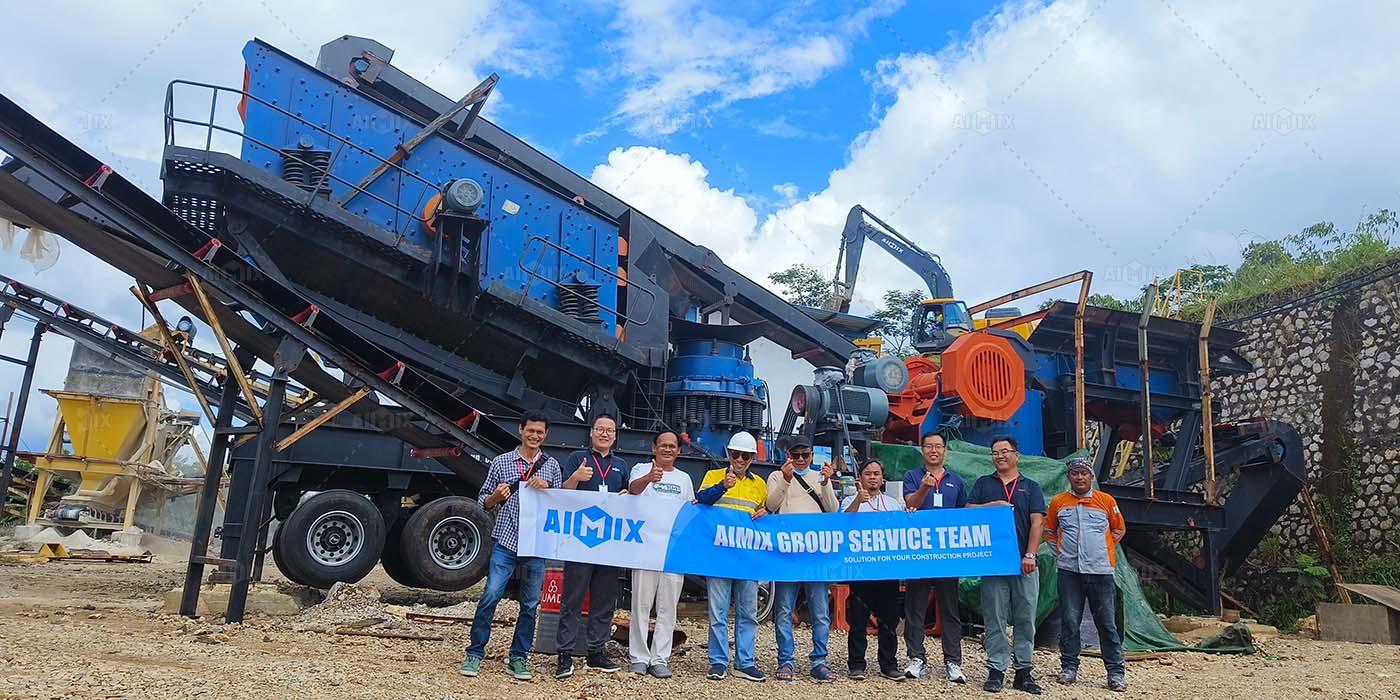
AIMIX provides a range of jaw crushers suitable for small to medium-scale road construction projects. Our crusher for sale is reliable, durable, and easy to maintain. Additionally, AIMIX offers local support, spare parts, and technical guidance, helping you maximize production while minimizing costs. Whether you need 15 TPH or 50 TPH, AIMIX has a solution tailored to your project needs.
Conclusion and Call to Action
In summary, for producing 1,000 m³ of crushed limestone per month, a jaw crusher with a capacity of 15–20 TPH is generally appropriate. Consider feeding size, output requirements, and operational hours when making your decision. Choosing the right crusher ensures efficient production, stable quality, and lower operating costs.
If you are ready to improve your road base projects with a reliable and efficient jaw crusher, AIMIX can help. Contact us today to discuss your project and find the perfect mesin stone crusher to meet your production goals.
Articles similaires

What Is The Best Mobile Crushing Plant Solution For Remote Island Projects In Indonesia?
Remote island projects in Indonesia face high logistics and material challenges. Learn the best mobile crushing plant solutions for efficient on-site aggregate production, lower costs, and reliable performance in remote and difficult conditions.


