
Learn how to choose the best primary and secondary crusher combination to produce 20–40 mm aggregate with ideal shape and strength for bridge deck projects.
How to Select a Primary and Secondary Crusher Combination for Producing 20–40 mm Aggregate for Bridge Decks
When building a bridge, the quality and size of the aggregate directly affect the deck’s strength and durability. For many bridge projects, 20–40 mm aggregate is the standard size for the concrete mix in the deck structure. Selecting the right primary and secondary crusher combination is crucial to achieve this size range consistently, while maintaining high production efficiency and low operating costs. In this guide, I will walk you through the key points to consider from both a contractor’s and a project owner’s perspective, so you can choose crusher machine for sale that meets your needs on-site.
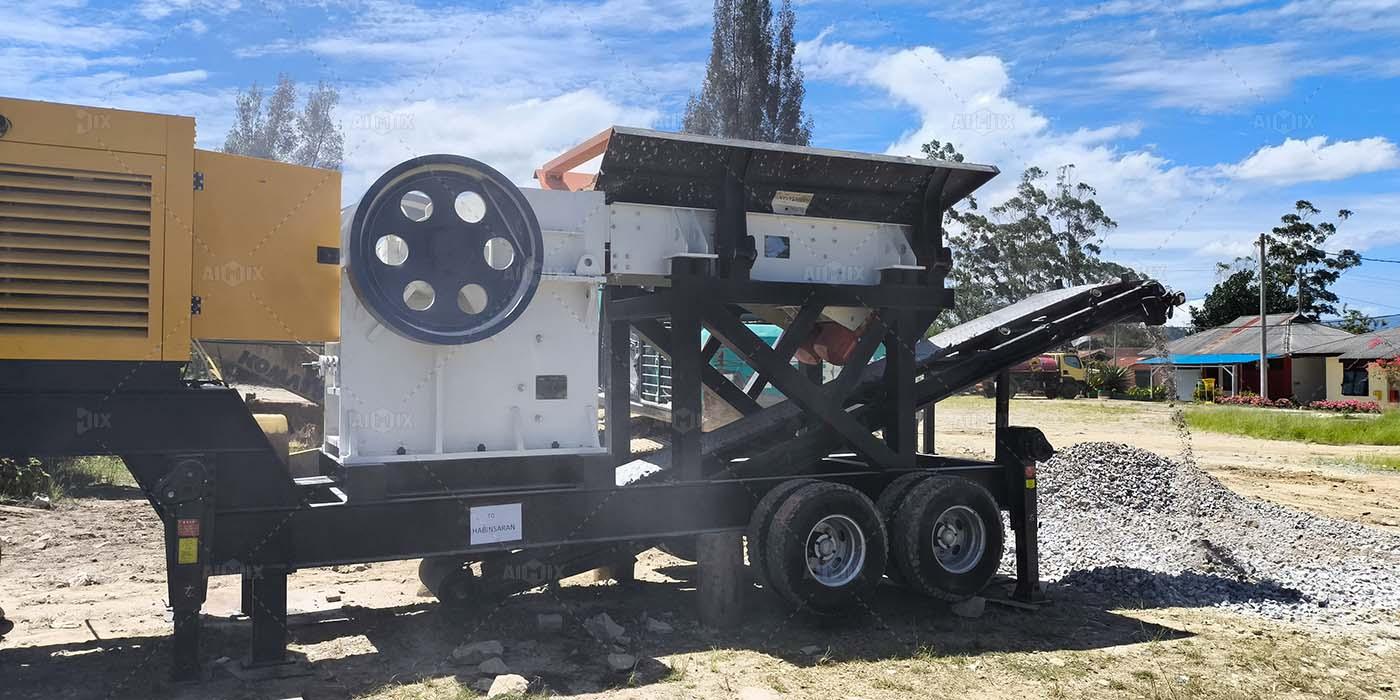
Understanding the Requirements for Bridge Deck Aggregate
Before selecting crushers, you must first understand the project requirements. Bridge decks need strong, well-shaped aggregate that can bond well in concrete. The target size of 20–40 mm means the crushing process must be precise, with minimal oversize or excessive fines. Additionally, the production process should ensure consistent particle shape, because poor shape can reduce concrete strength. This is why matching the right primary and secondary crushers matters from the start.
With the size target clear, the next step is to identify the most efficient crushing stages to reach it. This understanding will guide the choice of equipment.
Choosing the Right Primary Crusher
The primary crusher machine handles large feed material, often straight from the quarry. For producing 20–40 mm aggregate, the primary stage should reduce the raw stone to around 100–150 mm. This makes it easier for the secondary crusher to shape and size the material correctly.
Common Primary Crusher Options
Jaw Crusher: A jaw crusher is often preferred for its ability to handle hard rock and its consistent output size. It provides a stable feed for the secondary stage.
Gyratory Crusher: Suitable for very large capacities and continuous operation, though it requires more investment and maintenance expertise.
In most bridge deck projects, a jaw crusher is the practical choice, as it balances performance, cost, and simplicity. It also works well when the production site is close to the project, enabling quick material supply.
Once you have a primary crusher selected, you can then focus on pairing it with the right secondary crusher.
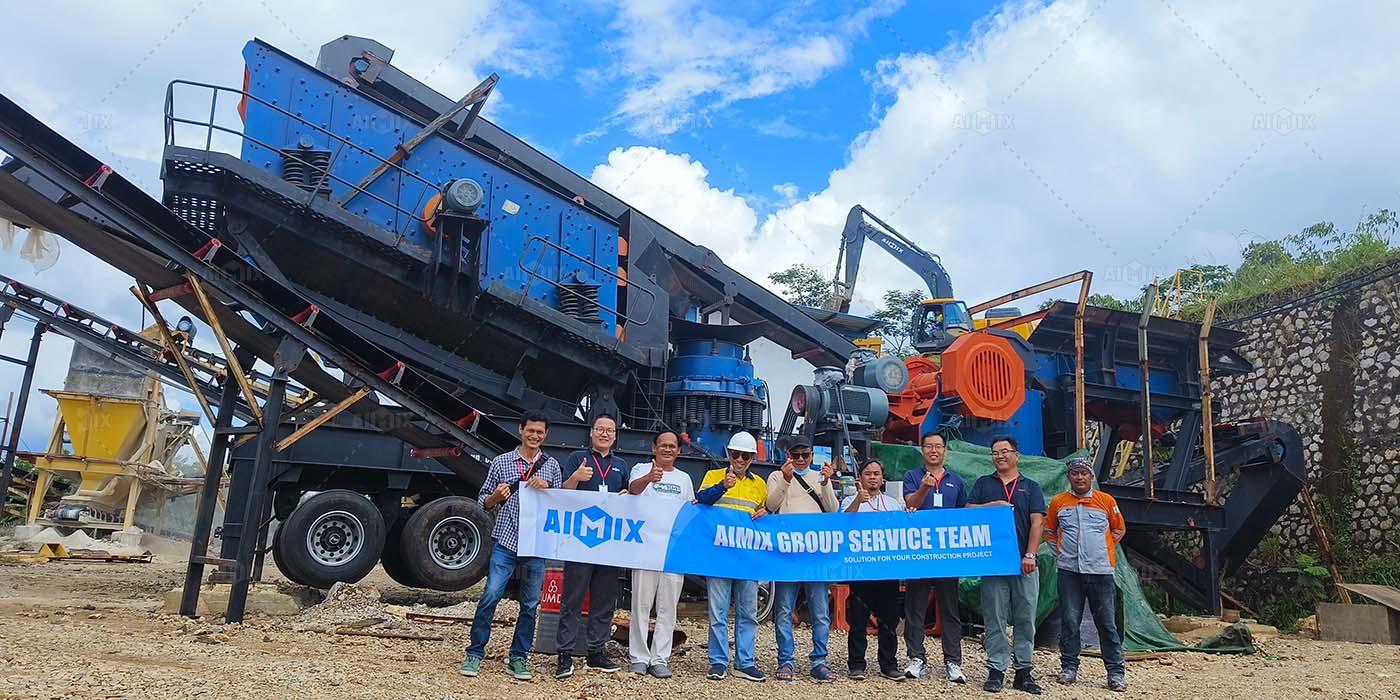
Selecting the Secondary Crusher for Size and Shape
The secondary cone crusher’s role is to take the primary crusher’s output and reduce it to the exact 20–40 mm range with proper shape. The secondary stage also removes excess fines, ensuring clean aggregate for concrete mixing.
Popular Secondary Crusher Choices
Cone Crusher: Excellent for producing well-shaped aggregate with minimal flakiness. It can handle medium to hard materials and provides adjustable settings to control output size precisely.
Impact Crusher: Good for shaping softer rock and producing a cubic shape, but it may generate more fines. Best used when the rock type is not too abrasive.
For bridge deck applications, cone crushers are often the preferred choice, as they consistently produce the desired size and shape, meeting strict concrete specifications.
Now that we have covered primary and secondary crusher selection, let’s look at how to combine them effectively.
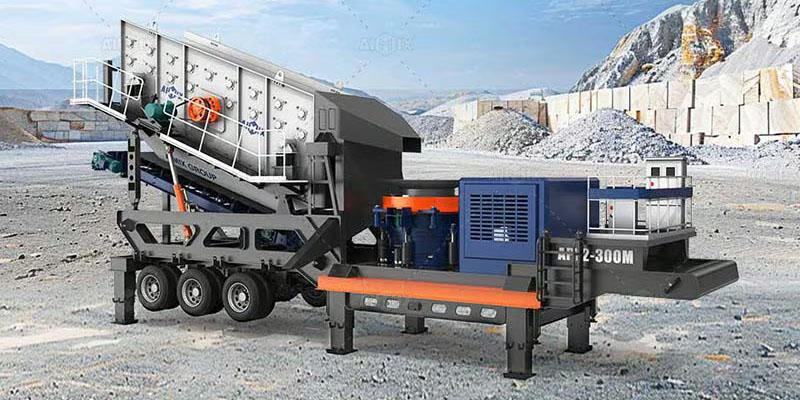
Building the Best Crusher Combination
For 20–40 mm bridge deck aggregate, a common setup is a Jaw Crusher + Cone Crusher combination. The jaw crusher reduces raw material to about 100 mm, and the cone crusher refines it to the final size with excellent shape. If the material is softer and shaping is critical, a Jaw Crusher + Impact Crusher setup can also be effective.
In both cases, installing a vibrating screen between and after the stages helps separate oversize and fines, ensuring only the target-sized aggregate reaches the final stockpile.
Of course, the combination must match the expected capacity. For bridge projects, capacity needs often range from 80–200 t/h. Selecting equipment that meets or slightly exceeds your peak demand ensures the project stays on schedule.
Considering Mobility and On-Site Conditions
Not every bridge project has the same site conditions. If your construction site is remote or space is limited, a mobile crusher plant can be the ideal solution. Mobile jaw and cone crushers can be combined in a compact, easy-to-transport setup. This reduces the need for multiple handling steps and allows production right next to the bridge site.
On the other hand, if the project is long-term and the source quarry is fixed, a stationary plant may be more cost-effective in the long run.
Final Tips for Crusher Selection
When making your final decision, consider:
Material hardness and abrasiveness
Required capacity per hour
Target size and shape specifications
Site mobility needs
Budget for purchase and operation
Balancing these factors ensures that the chosen combination meets both technical and financial goals.
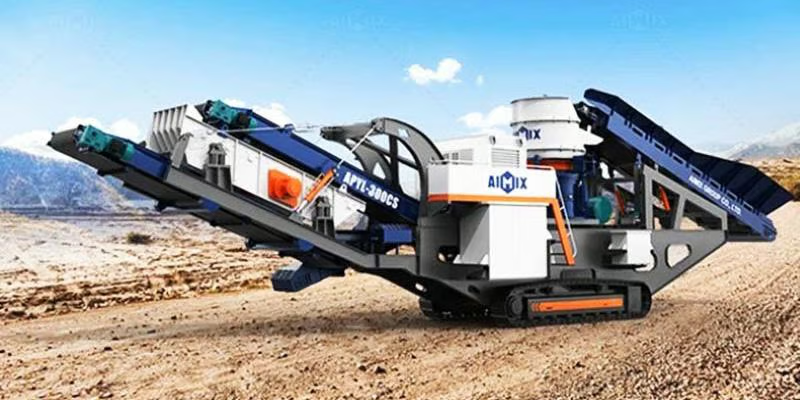
Why Work with AIMIX?
At AIMIX, we have helped many contractors in Indonesia select the best crusher setups for bridge and infrastructure projects. Our engineering team can design custom primary and secondary combinations based on your material, capacity, and site layout. We also provide mobile and stationary options, along with local service and spare parts support, so you can keep your production running smoothly without delays.
If you are planning a bridge deck project and need 20–40 mm aggregate production, contact us today. We will help you select a crusher combination that delivers the right size, shape, and quantity — on time and within budget.
Articles similaires

What Is The Best Mobile Crushing Plant Solution For Remote Island Projects In Indonesia?
Remote island projects in Indonesia face high logistics and material challenges. Learn the best mobile crushing plant solutions for efficient on-site aggregate production, lower costs, and reliable performance in remote and difficult conditions.


