Calculate the ideal concrete plant capacity for a 26,000 m³ toll road project in Java, Indonesia. Learn how to choose 50–60 m³/h batching plants for stable, efficient construction.
How Many m³/h Concrete Plant Capacity is Needed for 26,000 m³ Concrete Demand for a 5-Month Toll Road Project in Java, Indonesia?
When planning a toll road project in Java, one of the most practical questions contractors ask is simple but critical: what concrete plant capacity is enough to deliver the required volume on time? For a total demand of 26,000 m³ within 5 months, the answer is not just a number. It depends on schedule pressure, daily pouring targets, and site conditions. In this article, we break it down step by step from a real construction perspective, so you can choose the right batching plant Indonesia with confidence.
Understanding the Project Timeline and Total Demand
Before selecting equipment, you need to translate the total volume into a workable daily and hourly plan. This step directly affects your plant capacity choice.
Let’s start with the basic calculation:
Total concrete demand: 26,000 m³
Project duration: 5 months (≈150 days)
However, in real projects, you rarely pour concrete every single day. Weather, logistics, and site coordination reduce actual working days. Therefore, we usually consider 120–130 effective working days.
Now, let’s calculate the average daily demand:
26,000 m³ ÷ 130 days ≈ 200 m³/day
At first glance, 200 m³ per day looks manageable. But in reality, pouring is not evenly distributed. Some days require higher output, especially during peak paving stages. Therefore, you must design capacity with a safety margin.
Breaking Down Daily Demand into Hourly Production
Once the daily volume is clear, the next step is to determine how many hours you will operate per day. This directly defines your required plant capacity.
Typically, toll road projects in Indonesia run 8–10 hours per day. Let’s calculate both scenarios:
Scenario 1: 8-hour working day
200 m³ ÷ 8 hours = 25 m³/h
Scenario 2: 10-hour working day
200 m³ ÷ 10 hours = 20 m³/h
At this stage, it seems a 25–30 m³/h small concrete plant could meet the demand. However, this is only the theoretical minimum. In practice, several factors reduce actual output efficiency.
Why You Should Not Choose the Minimum Capacity
Although the calculated requirement is around 20–25 m³/h, choosing a plant at this level often leads to delays. Let’s understand why.
1. Efficiency Loss in Real Operation
Batching plants rarely run at 100% efficiency. Factors such as material feeding, truck waiting time, and operator coordination reduce actual output to about 70–85% of rated capacity.
2. Peak Demand Periods
Road projects do not pour concrete evenly. During base layers or continuous paving, demand can jump significantly. If your plant cannot handle peak demand, the entire schedule suffers.
3. Weather and Uncertainty in Java
In regions like Java, sudden rain can interrupt work. Therefore, contractors often need to “catch up” on lost time, which requires higher short-term production capacity.
Because of these reasons, experienced contractors always choose a higher capacity than the theoretical minimum.
Recommended Concrete Plant Capacity for This Project
Based on the calculations and real-world factors, we can now define a practical recommendation.
Option 1: 35–50 m³/h Concrete Batching Plant
This option suits projects with moderate schedule pressure and stable working conditions. It provides enough buffer to handle efficiency loss and minor peak demand.
Option 2: 60 m³/h Concrete Batching Plant (Recommended)
This is the most balanced choice for a 26,000 m³ toll road project in Java. It offers:
Stable daily production with lower risk
Flexibility to handle peak pouring days
Faster recovery after delays
Option 3: 75 m³/h or Above (For Tight Schedules)
If the project has strict deadlines or multiple pouring sections, a higher capacity plant ensures maximum efficiency and reduces project risk.
How to Match Plant Capacity with Your Site Conditions
Even with the right capacity range, you still need to adapt the solution to your actual jobsite. This step ensures the plant performs as expected.
Consider Material Supply Stability
If your aggregates and cement supply are not stable, a higher-capacity plant helps buffer interruptions.
Evaluate Transportation Distance
Long hauling distances reduce delivery efficiency. In this case, you may need higher production to maintain continuous supply.
Check Site Space and Layout
In some toll road projects, space is limited. Compact batching plants with optimized layout become a better choice.
From Planning to Profit: Why Capacity Matters
Choosing the right plant is not only about meeting demand. It directly affects your project cost and profitability.
If the capacity is too low, delays increase labor and equipment costs. On the other hand, if the capacity is too high without planning, your investment may not be fully utilized.
Therefore, the goal is balance. A properly selected plant helps you complete the project on time while controlling operational costs.
Conclusion: Build with Confidence, Choose Smart Capacity
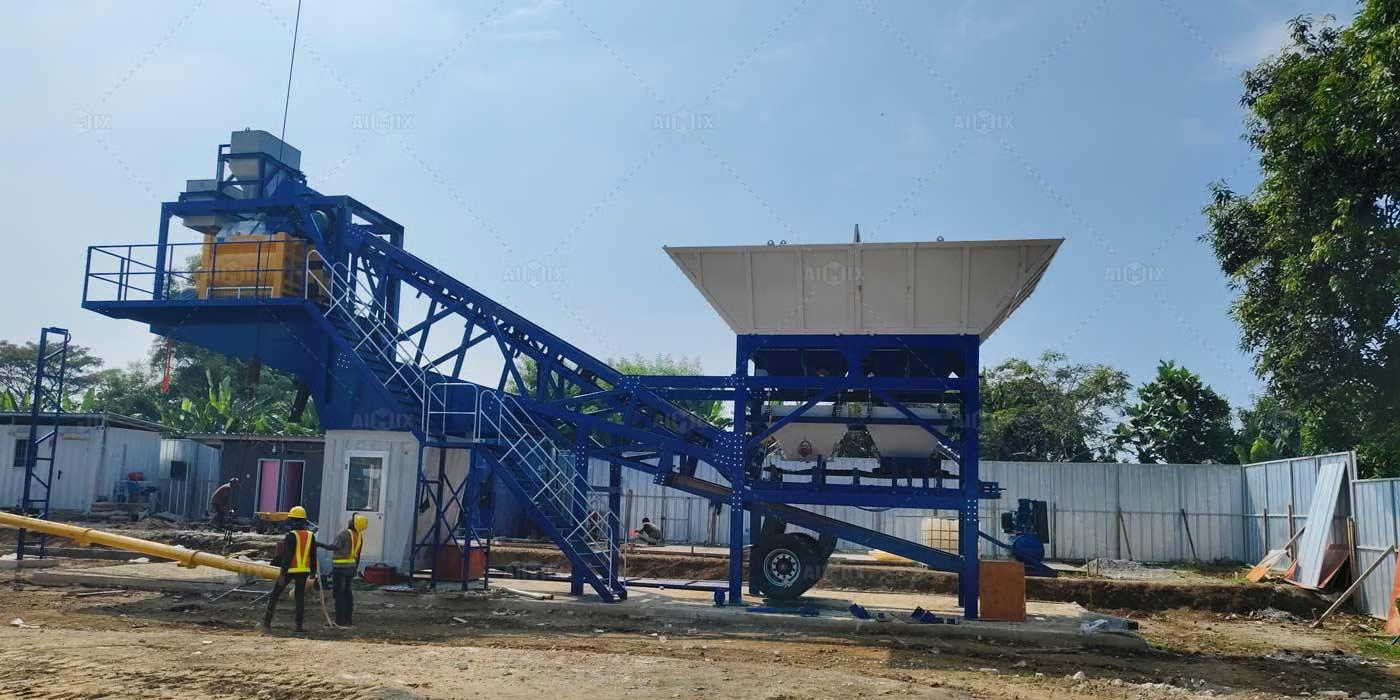
For a 26,000 m³ toll road project over 5 months in Java, the theoretical requirement is around 20–25 m³/h. However, considering real construction conditions, a 50–60 m³/h concrete batching plant is the most practical and reliable choice.
If your project has tighter deadlines or higher peak demand, moving to 60–75 m³/h gives you a clear advantage.
Every project has its own challenges. That is why choosing the right concrete plant should always be based on your actual schedule, site conditions, and business goals.
Want a more accurate solution for your project in Indonesia? Share your project timeline, daily pouring plan, and site conditions with us. Our team can help you match the exact concrete plant configuration to ensure smooth construction and maximum return on your investment. Learn about the overall batching plant price at right!
Indonesia batching plant terdekat
Articles similaires

What Is The Best Mobile Crushing Plant Solution For Remote Island Projects In Indonesia?
Remote island projects in Indonesia face high logistics and material challenges. Learn the best mobile crushing plant solutions for efficient on-site aggregate production, lower costs, and reliable performance in remote and difficult conditions.


