Discover how a 30–40 m³/h concrete mixer pump can efficiently support 300 m³/day hillside housing projects in Bandung by improving productivity, reducing labor pressure, controlling costs, and overcoming complex terrain challenges.
How Can A 30–40 m³/h Concrete Mixer Pump Support Hillside Housing Projects Of 300 m³/day In Bandung?
Bandung’s hillside areas present unique construction challenges. Steep slopes, narrow village roads, and unstable ground often slow down housing projects. Many contractors ask a practical question: can a 30–40 m³/h concrete mixer pump really support a daily output target of 300 m³? From my experience in hillside construction scenarios, the answer is yes, when you use the right working strategy and equipment configuration. In this article, I will explain how this type of concrete mixture pump fits Bandung’s terrain, how to organize daily concrete work efficiently, and why this solution can help contractors reduce risk and improve project control.
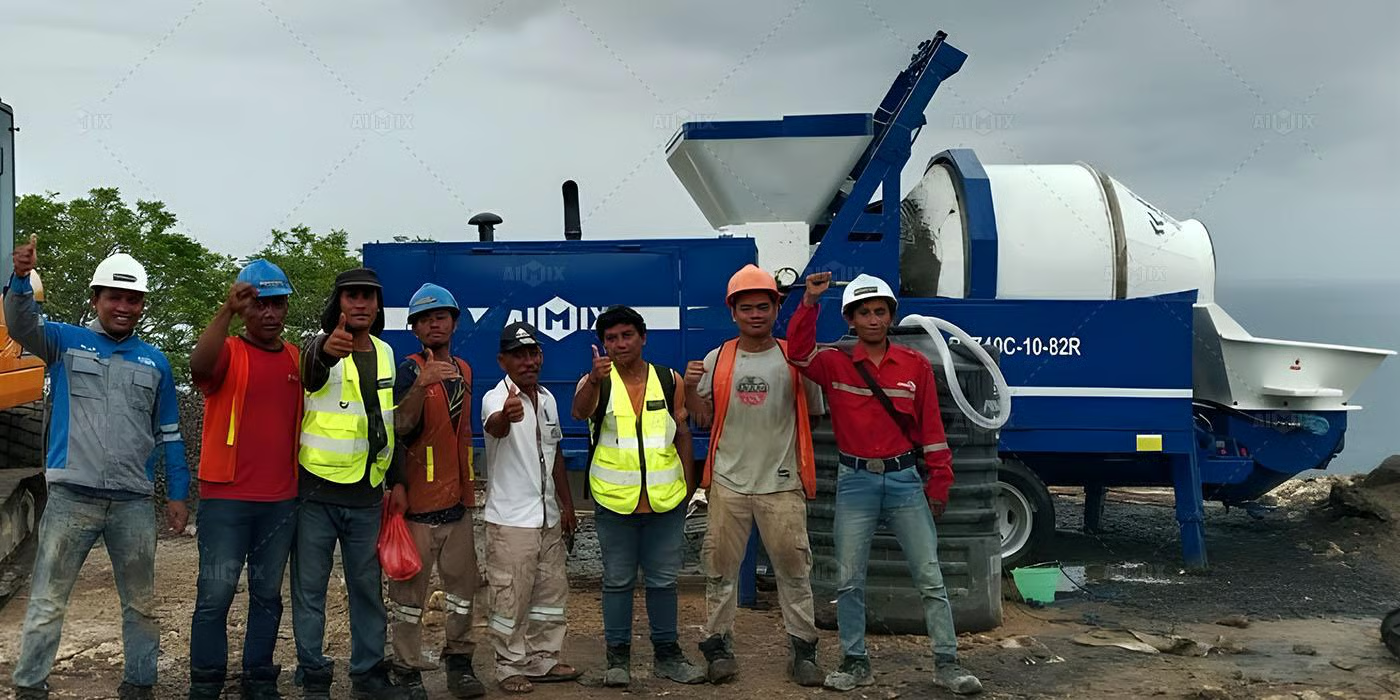
Why Hillside Housing Projects In Bandung Require A Smarter Concrete Solution
Before choosing equipment, most contractors first think about access roads and logistics. However, the actual challenge starts inside the jobsite. Hillside plots usually have irregular shapes and elevation differences. Workers often struggle to move concrete by wheelbarrows. At the same time, ready-mix trucks cannot always reach upper platforms. As a result, delays and material waste quickly appear.
Because of these realities, a compact but powerful concrete system becomes not only useful, but necessary. A 30–40 m³/h concrete mixer pump combines mixing and pumping functions in one unit. Therefore, it reduces handling steps. It also helps teams control concrete quality in changing mountain weather.
How A 30–40 m³/h Concrete Mixer Pump Can Realistically Reach 300 m³ Per Day
After understanding the jobsite challenge, the next step is to test real production capacity. A 30–40 m³/h portable concrete mixer with pump does not run at full speed all day. In real hillside projects, effective working time usually stays around 8–10 hours. That still gives contractors a strong production window.
Let us look at a practical production rhythm. If the pump averages 32–35 m³ per hour for 9 hours, the total output can reach 288–315 m³. This range already meets the 300 m³/day target. Moreover, because mixing and pumping happen in one cycle, the crew avoids waiting time between batches. As a result, the daily schedule becomes more predictable and easier to manage.
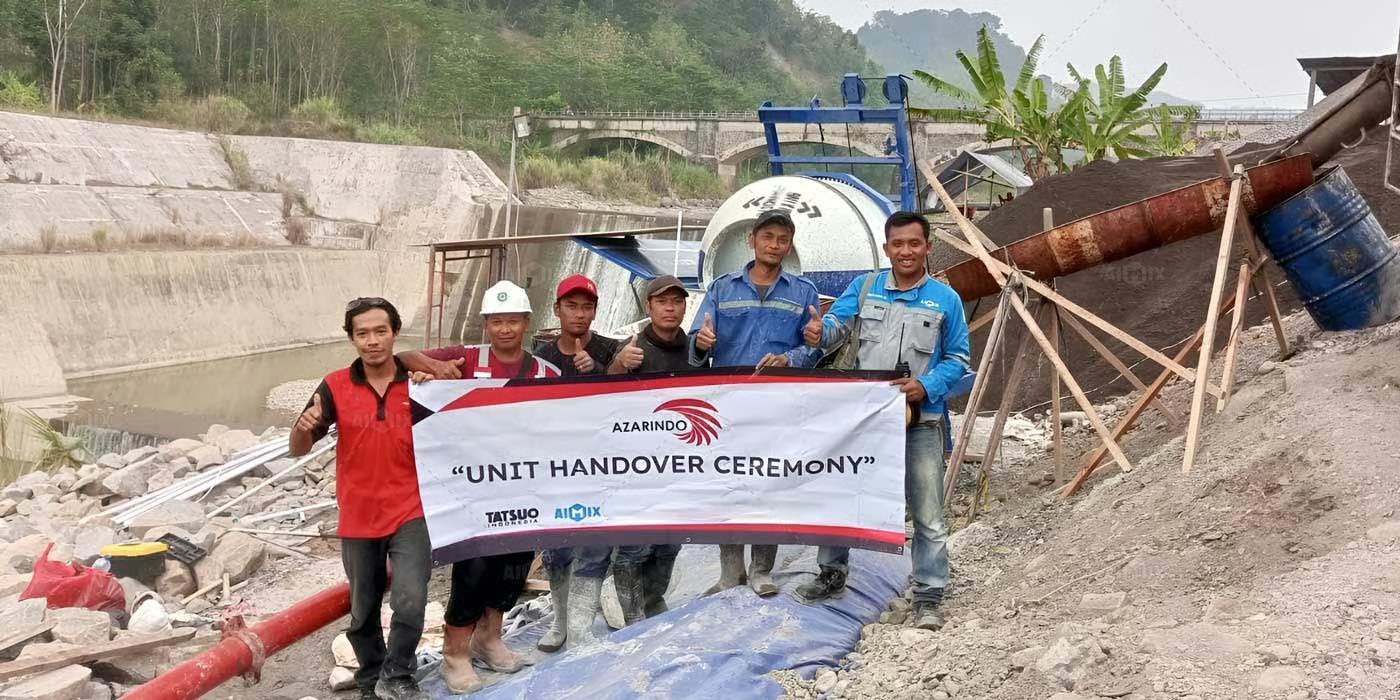
Key Working Strategies That Make This Capacity Achievable In Real Projects
Even with good equipment, poor organization can limit performance. Therefore, contractors in Bandung’s hillside areas need a clear working strategy from day one. First, material preparation should start early in the morning. Sand, aggregate, and cement should stay close to the mixer pump to reduce loader travel time.
Next, stable power supply plays an important role. Diesel-driven mixer pumps work better in remote hills. They do not depend on weak grid electricity. Meanwhile, backup fuel planning avoids sudden shutdowns. In addition, operators should maintain a steady pumping rhythm instead of frequent stops. This habit protects the pump system and supports stable output.
Furthermore, smart pipeline layout increases efficiency. Crews should fix steel pipes firmly along hillside edges. Shorter bends and larger radius turns reduce pressure loss. As a result, the mesin pompa beton delivers concrete smoothly to upper floors and terraces.
How This Solution Reduces Labor Pressure And Improves Jobsite Safety
After optimizing equipment and workflow, contractors quickly see changes in labor management. Traditional hillside concrete work requires many workers to carry buckets or push carts uphill. This not only wastes time but also increases injury risk.
With a 30–40 m³/h concrete mixer pump, the team can reduce manual transport. Workers can focus on placing and finishing concrete. At the same time, fewer people need to stand on steep temporary paths. Because of this, the overall safety level of the project improves.
In addition, controlled pumping reduces spillage. Less wasted concrete means cleaner sites and lower material costs. Over time, this directly improves project profit margins.
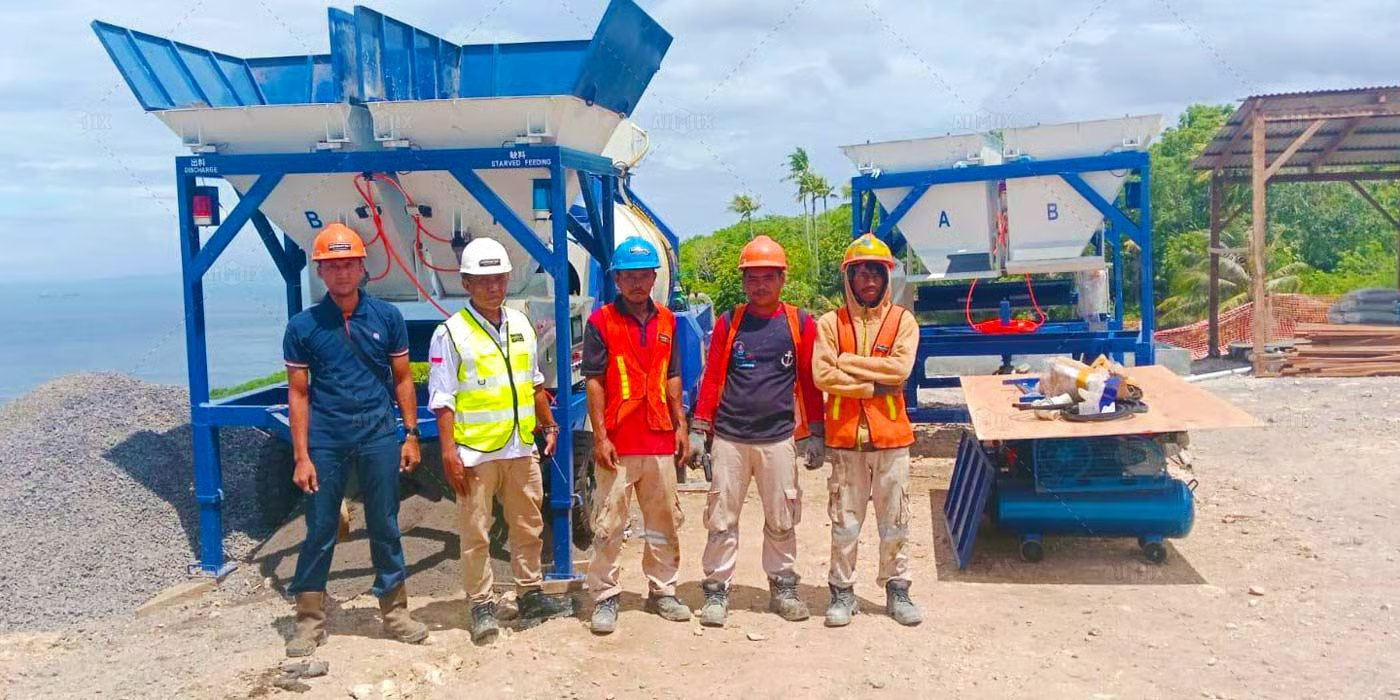
Why This Equipment Fits The Real Conditions Of Bandung’s Hillside Housing Market
Bandung’s residential construction market demands fast delivery and flexible operation. Developers often sell units early and push contractors to shorten schedules. At the same time, many projects scatter across different hills and villages.
This is where mobility becomes valuable. A 30–40 m³/h concrete mixer pump normally uses a wheeled or truck-mounted chassis. Contractors can move the unit between small projects without dismantling large systems. This flexibility supports both small clusters of houses and medium-scale housing estates.
Moreover, this type of equipment supports different concrete mixes. Contractors can adjust slump and strength according to foundation, columns, and slab requirements. Therefore, one machine can handle multiple structural stages during the same project.
Cost Control Advantages That Directly Attract Contractors And Developers
Once contractors see technical performance, they also care about financial impact. A concrete mixer pump helps reduce external concrete purchase costs. Contractors can buy raw materials locally in Bandung and surrounding areas. This strategy lowers transportation expenses.
In addition, combined mixing and pumping means fewer machines on site. Less equipment reduces fuel consumption and maintenance cost. Because of this, contractors gain better cost predictability. Developers also appreciate more stable budgets and fewer surprise expenses.
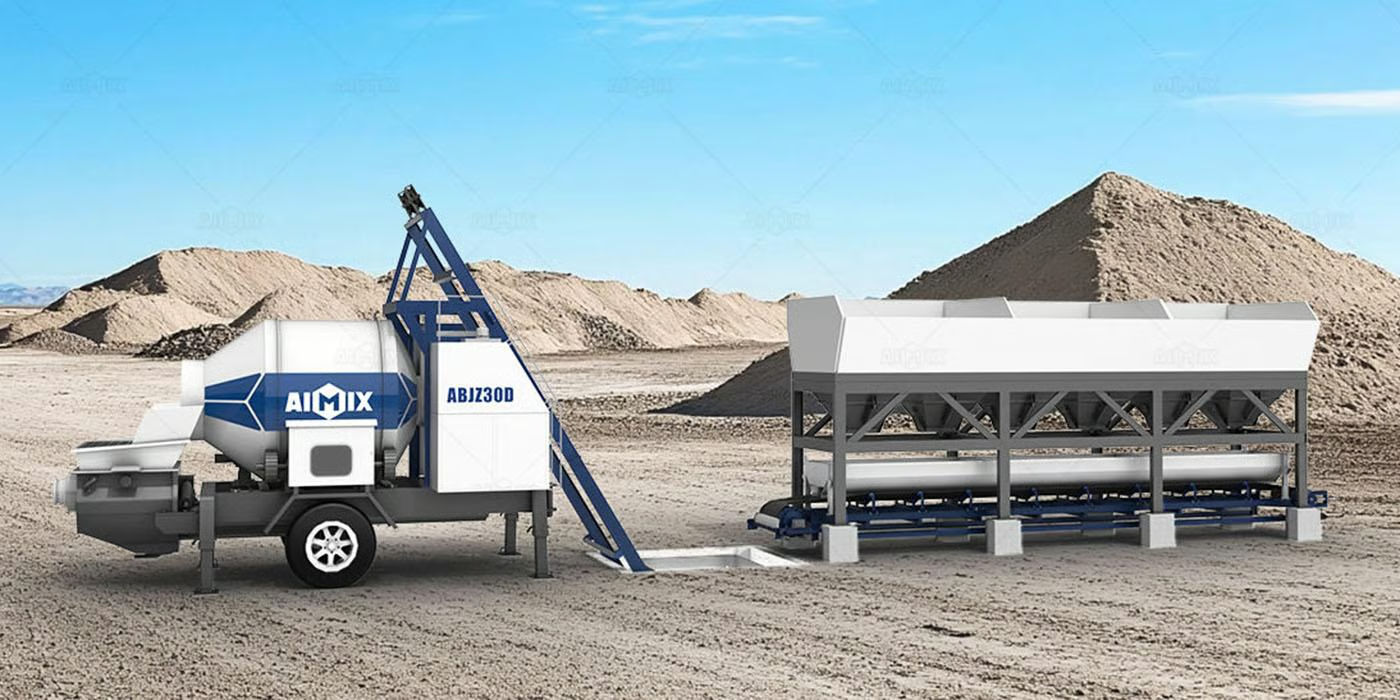
How AIMIX Supports Contractors Who Work In Complex Hillside Projects
After understanding technical and financial benefits, many contractors look for reliable partners. AIMIX focuses on practical solutions for complex terrain projects. We design our concrete mixer pumps with strong pumping pressure, stable mixing systems, and durable frames. These features help machines perform well under Bandung’s humid and challenging working conditions.
Moreover, AIMIX provides technical guidance for pipeline layout, material ratio control, and daily maintenance habits. This support helps contractors shorten learning curves and reduce operation risks. When you choose AIMIX, you gain more than a machine. You gain a long-term partner who understands real construction problems.
Start Building Hillside Housing Projects With More Confidence
If you plan to deliver 300 m³ of concrete per day in Bandung’s hillside areas, a 30–40 m³/h concrete mixer pump can become your most reliable asset. It improves efficiency, controls cost, and increases jobsite safety. More importantly, it gives you confidence when facing tight schedules and complex terrain.
Now is the right time to upgrade your concrete strategy. Work with AIMIX and discover how the right equipment can help you complete hillside housing projects faster and with greater stability.


