Can a concrete boom pump with pan mixer deliver 60–80 m³/h without a batching plant? Explore performance, limits, and best use cases.
Can A Concrete Boom Pump With Pan Mixer Achieve 60–80 M³/H Without Batching Plant?
“We want higher output, but we don’t want the cost and complexity of a full batching plant.” This is a common concern among contractors working on mid-sized projects, especially in remote areas or fast-track urban jobs. Many project managers now ask a practical question: can a combination of a concrete boom pump and a pan mixer for sale really deliver 60–80 m³/h efficiently?
The short answer is: it depends on how you configure and manage the system. More importantly, it depends on your project type, labor organization, and material supply. In this article, we will break down the real capabilities, limitations, and ideal use cases of this setup, so you can make a smarter decision.
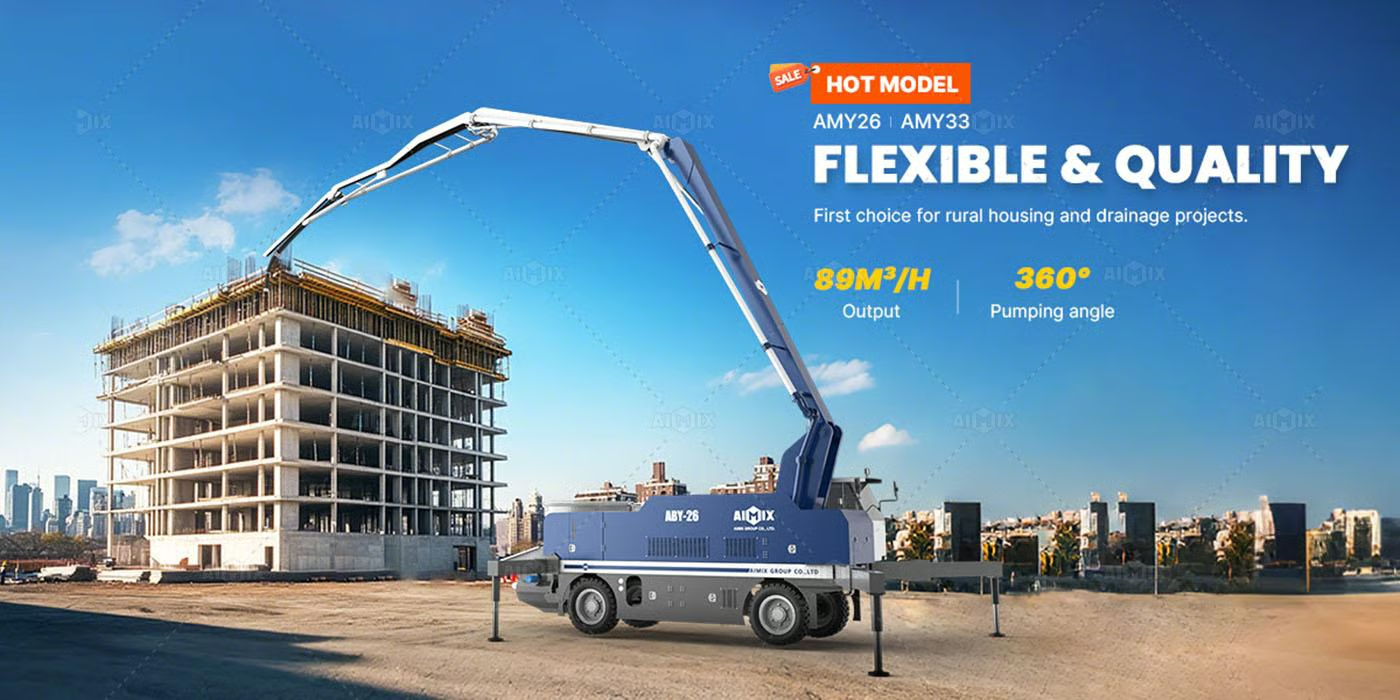
Understanding The Target: Why 60–80 M³/H Matters
Before we explore the solution, we need to understand why this output range is important. For many contractors, 60–80 m³/h is the threshold where productivity meets profitability.
In practical terms, this capacity supports:
Typical Project Scenarios
- Mid-rise residential buildings (5–15 floors)
- Commercial slabs and foundations
- Infrastructure works like bridges and culverts
Because of this, contractors often look for flexible solutions instead of investing in a full batching plant.
So naturally, the next question arises: can a simpler setup deliver similar performance?
System Composition: How Boom Pump + Pan Mixer Works Together
To answer that, we must first look at how the system operates. A concrete boom pump handles delivery and placement, while a pan mixer handles on-site mixing.
This combination creates a decentralized batching solution.
Core Equipment Roles
Pan Mixer: Produces concrete in batches, usually 0.5–1.5 m³ per cycle.
Boom Pump: Transfers concrete continuously to pouring points, ensuring placement efficiency.
However, coordination becomes critical here. Unlike a batching plant, this setup relies heavily on manual or semi-automatic feeding.
Therefore, achieving high output is not just about machine capacity—it is about workflow design.
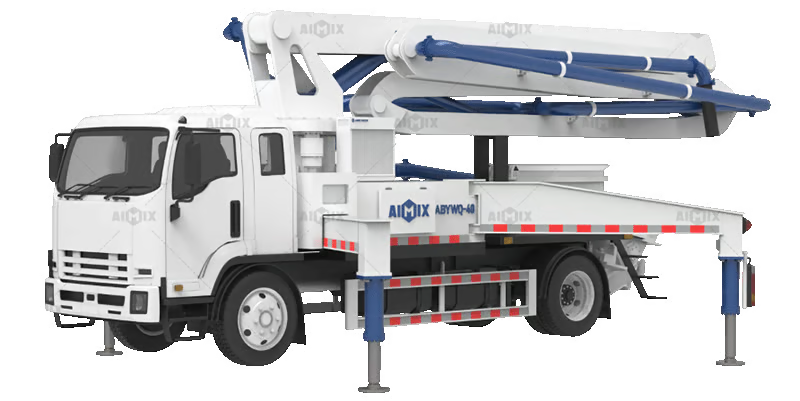
Can It Really Reach 60–80 M³/H? Key Factors To Consider
Now we move to the core question. Yes, under optimized conditions, this setup can approach 60 m³/h, but reaching 80 m³/h consistently is challenging.
Let’s break it down logically.
1. Mixer Cycle Time And Capacity
A typical pan mixer cycle takes 60–90 seconds. If you use a 1 m³ mixer:
- 40–50 cycles per hour = 40–50 m³/h theoretical output
To push beyond this, you need:
- Larger mixers (1.5–2 m³)
- Multiple mixers working in parallel
Without this, the system becomes the bottleneck.
2. Material Feeding Efficiency
Next, material supply determines continuity. If aggregates, cement, and water are not fed quickly, production slows down.
Efficient setups usually include:
- Wheel loaders for aggregate feeding
- Screw conveyors or manual cement feeding
- Stable water supply system
In contrast, poor feeding can reduce output by 20–30%.
3. Labor Coordination
Unlike automated plants, this solution depends heavily on operators. Workers must synchronize mixing, loading, and pumping.
Therefore:
- Skilled teams increase efficiency
- Poor coordination causes delays and idle pump time
In many cases, labor becomes the hidden constraint.
4. Pump Matching And Continuity
A boom pump can easily handle 60–80 m³/h. However, it requires continuous concrete supply.
If supply fluctuates:
- Pump efficiency drops
- Pipeline blockage risks increase
So, the mixer must “feed” the pump steadily.
Where This Setup Works Best
Although limitations exist, this combination offers strong advantages in specific scenarios.
Let’s look at where it performs best.
1. Remote Or Difficult Access Projects
In areas where batching plants are hard to install, this setup becomes a practical choice.
For example:
- Mountain projects
- Island construction
- Rural infrastructure works
2. Medium-Scale Projects With Flexible Scheduling
If your daily demand fluctuates, this system allows flexible production without high fixed costs.
3. Projects With Budget Constraints
Compared to batching plants, initial investment is much lower. This helps contractors reduce financial pressure.
However, lower cost comes with higher management requirements.
Limitations You Should Not Ignore
While the solution sounds attractive, it is not perfect. Ignoring its limitations can lead to serious delays.
So, let’s be realistic.
1. Difficult To Maintain Stable High Output
Reaching 60 m³/h is possible. Maintaining 80 m³/h continuously is difficult without multiple mixers.
2. Higher Labor Dependency
You need more workers. You also need experienced operators.
3. Quality Consistency Risks
Manual or semi-automatic mixing can lead to variation in concrete quality.
This becomes critical in structural projects.
4. Limited Scalability
As project size grows, this system becomes inefficient compared to batching plants.
At that point, upgrading becomes necessary.
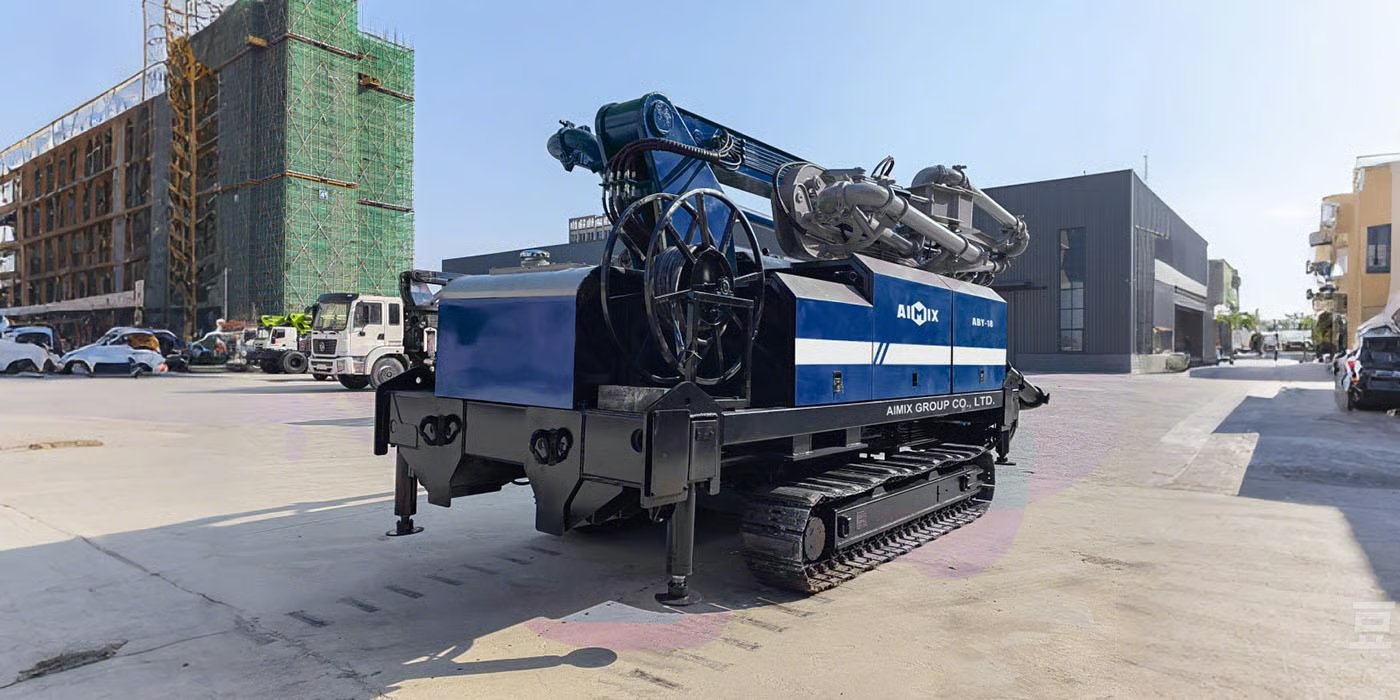
How To Optimize The System For Better Performance
Even with these challenges, you can improve output significantly with the right strategy.
Here are practical ways to optimize your setup.
Use Dual Mixers
Two pan mixers can alternate cycles, ensuring continuous supply to the pump.
Improve Feeding System
Use loaders and organized material storage to reduce waiting time.
Train Your Team
Clear task division and operator training can increase efficiency by 15–25%.
Match Equipment Properly
Do not oversize the mesin concrete pump without improving mixing capacity. Balance is key.
Final Verdict: Is It A Smart Alternative?
So, can a concrete boom pump with a pan mixer achieve 60–80 m³/h without a batching plant?
The answer is nuanced.
Yes, you can reach around 60 m³/h with proper planning and equipment upgrades. However, consistently achieving 80 m³/h requires multiple mixers, excellent coordination, and strong site management.
In other words, this mobil pompa beton works well as a flexible, cost-effective solution for medium-scale projects. But it does not fully replace a batching plant in high-demand scenarios.
Looking For The Right Concrete Solution For Your Project?
Every project has different constraints—budget, location, labor, and timeline. That is why choosing the right equipment combination matters more than choosing the biggest machine.
If you are considering a boom pump with a pan mixer, or comparing it with a batching plant, we can help you evaluate the best option based on your actual project data.
Contact us today to get a customized solution that balances output, cost, and efficiency—so your project runs smoothly from start to finish.
Articles similaires

What Is The Best Mobile Crushing Plant Solution For Remote Island Projects In Indonesia?
Remote island projects in Indonesia face high logistics and material challenges. Learn the best mobile crushing plant solutions for efficient on-site aggregate production, lower costs, and reliable performance in remote and difficult conditions.


