Looking for a 120 TPH mobile crusher setup to process river stone into 0–5 mm sand for concrete batching plants in Bali? Explore the ideal configuration for efficient, cost-effective sand production in this article. Learn how the right crusher setup can improve your supply stability and reduce costs.
Can A 120 TPH Mobile Crushing Plant Handle Volcanic Rock To Produce Sub-Base Aggregates For Remote Road Construction In Indonesia?
Indonesia is a country shaped by volcanoes. From Java to Sumatra and Sulawesi, many road construction projects must deal with volcanic rock. For contractors working in remote areas, this material can be both a challenge and an opportunity. On one hand, volcanic rock is hard and abrasive. On the other hand, it is widely available and can become a valuable source of aggregates for road base layers.
Because many infrastructure projects take place far from large cities, contractors often ask a practical question: can a 120 TPH mobile crushing plant process volcanic rock efficiently and produce sub-base aggregates for road construction? The short answer is yes. However, the real answer depends on several factors such as rock hardness, plant configuration, and project logistics.
In this article, we will explore how a 120 TPH mobile crushing plant for sale can support remote road construction projects in Indonesia. More importantly, we will explain why many contractors choose this type of solution for challenging volcanic environments.
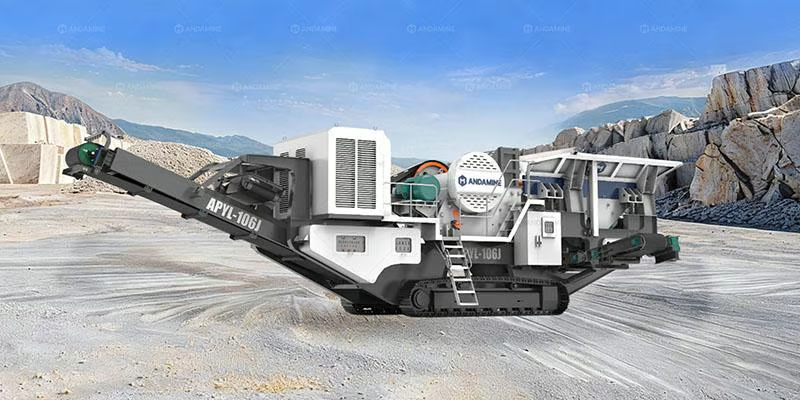
Why Volcanic Rock Is Common In Indonesian Road Projects
Before discussing equipment solutions, it is important to understand the nature of the material itself. Indonesia sits on the Pacific Ring of Fire, which means volcanic formations are extremely common across the country.
As a result, many road projects encounter materials such as basalt, andesite, and volcanic breccia. These rocks usually have high compressive strength and strong abrasion resistance. Therefore, they perform well as road base and sub-base aggregates.
However, their hardness also creates difficulties during processing. Traditional small crushers may struggle with continuous production. In addition, transporting aggregates from distant quarries increases project costs.
For this reason, many contractors prefer on-site crushing solutions. By using a mobile crushing plant near the construction site, they can turn local volcanic rock into usable aggregates. This approach reduces transportation costs and improves project efficiency.
Can A 120 TPH Mobile Crushing Plant Handle Volcanic Rock?
Now that we understand the material conditions, the next question becomes clear: is a 120 TPH mobile crushing plant powerful enough to process volcanic rock?
In most road construction scenarios in Indonesia, the answer is yes. A well-designed 120 TPH mobile stone crusher plant can process hard rock materials such as basalt or andesite. At the same time, it can produce stable aggregate sizes required for road sub-base layers.
Several factors make this possible.
Strong Primary Crushing Capability
First, the plant usually includes a jaw crusher as the primary crushing unit. Jaw crushers provide strong compression force. Therefore, they can break large volcanic rocks into smaller pieces efficiently.
For example, a typical configuration may accept feed sizes of 500–700 mm. After primary crushing, the material size reduces to around 100–150 mm. This stage prepares the rock for secondary processing.
Efficient Secondary Crushing For Road Aggregates
Next, the secondary crushing stage shapes the material into usable aggregates. Many mobile plants use cone crushers or impact crushers at this stage.
If the project focuses on high-strength aggregates, contractors often choose cone crushers. Cone crushers handle hard rock well and produce consistent particle sizes. As a result, they are suitable for producing sub-base materials such as 0–40 mm or 0–50 mm aggregates.
In contrast, if the project requires more cubical particles, an impact crusher may become the better option.
Integrated Screening System
After crushing, the plant sends materials to a vibrating screen. The screening system separates aggregates into different size ranges.
For example, a typical configuration may produce:
0–5 mm stone dust
5–20 mm aggregates
20–40 mm sub-base aggregates
Because the screening system works continuously, the plant maintains a stable production capacity close to 120 tons per hour under normal conditions.
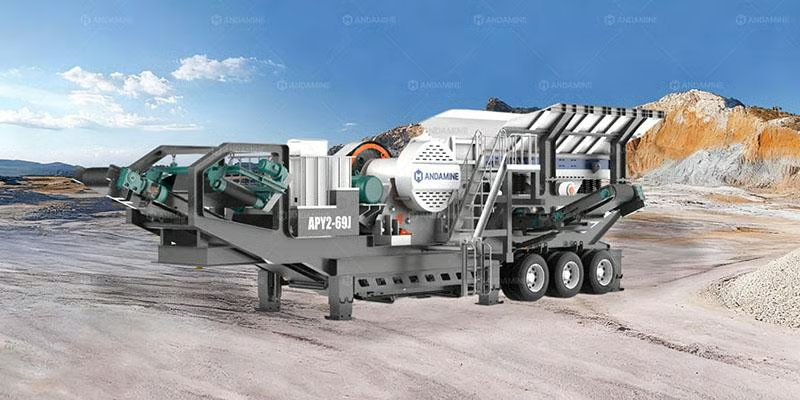
Advantages Of Mobile Crushing Plants For Remote Road Construction
Equipment capability is only part of the story. Equally important, crushing plants for sale bring several operational advantages for remote projects in Indonesia.
Therefore, many contractors now prefer mobile solutions over traditional fixed crushing plants.
Easy Transportation To Remote Areas
First, mobility solves a major challenge in island regions. Indonesia consists of thousands of islands, and many road projects occur far from large aggregate suppliers.
A mobile crushing plant can move by trailer or container. Contractors can transport it directly to the project site. As a result, they avoid long-distance aggregate hauling.
On-Site Aggregate Production
Second, on-site production significantly reduces costs. Instead of purchasing aggregates from external quarries, contractors can process local volcanic rock.
This strategy lowers transportation expenses and ensures a stable supply of materials. In remote regions where logistics are difficult, this advantage becomes especially valuable.
Flexible Production For Different Road Layers
Furthermore, mobile plants allow flexible aggregate production. By adjusting crusher settings and screen sizes, operators can produce different aggregate specifications.
For example, the same crusher plant may produce:
Sub-base aggregates for rural roads
Base layer aggregates for national highways
Stone materials for drainage layers
This flexibility helps contractors adapt to multiple project requirements.
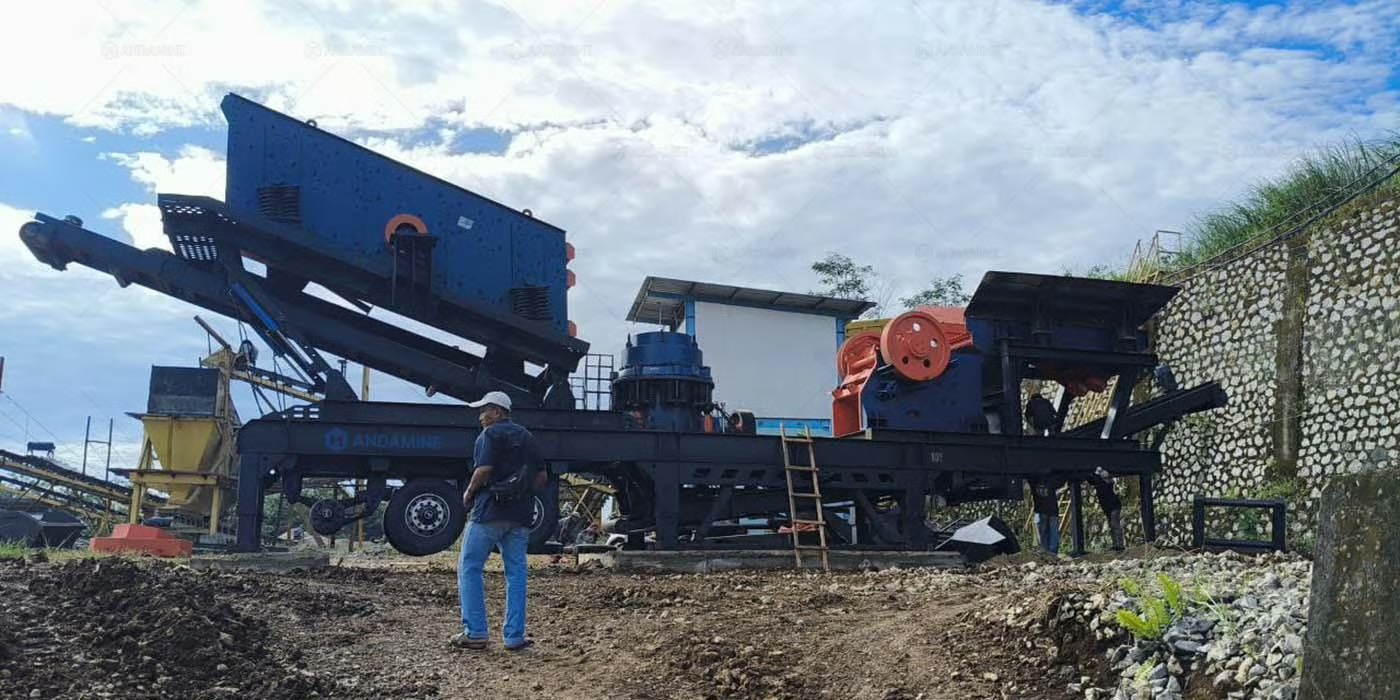
Typical Configuration Of A 120 TPH Mobile Crushing Plant
To better understand the solution, let us look at a typical configuration used in Indonesian road projects.
Primary Crushing Unit
Mobile jaw crusher
Feed size: up to 600 mm
Output size: 100–150 mm
Secondary Crushing Unit
Mobile cone crusher or impact crusher
Output size adjustment for road aggregates
Screening And Conveying System
Vibrating screen with multiple layers
Final aggregate sizes such as:
0–5 mm
5–20 mm
20–40 mm
Under ideal conditions, this configuration can achieve around 100–120 tons per hour of production. This capacity is often sufficient for many regional road construction projects in Indonesia.
Is A 120 TPH Plant Suitable For Your Project?
At this point, many contractors start evaluating their project scale. A 120 TPH mobile crushing plant usually fits medium-scale road construction projects.
For example, it works well for:
District road upgrades
Rural infrastructure programs
Mountain road development
Island transportation projects
If a project requires around 800–1000 tons of aggregates per day, this type of plant can usually meet the demand. However, for very large expressway projects, contractors may consider higher capacities such as 200–300 TPH.
Choose The Right Crushing Solution For Indonesian Conditions
Every road construction project has unique conditions. Rock hardness, project location, and production requirements all affect equipment selection. Therefore, choosing the right crushing solution is essential.
A 120 TPH mobile crushing plant offers a balanced combination of mobility, capacity, and flexibility. For many contractors working in Indonesia’s volcanic regions, it provides a practical way to convert local rock into valuable road-building materials.
If you are planning a road construction project in Indonesia and need a reliable aggregate production solution, the AIMIX team can help. Our engineers can recommend suitable mobile crushing plant configurations based on your raw materials, required output size, and project capacity.
Contact AIMIX today to discuss your project. Let us help you build efficient and cost-effective crushing solutions for Indonesia’s challenging construction environments.
Articles similaires

What Is The Best Mobile Crushing Plant Solution For Remote Island Projects In Indonesia?
Remote island projects in Indonesia face high logistics and material challenges. Learn the best mobile crushing plant solutions for efficient on-site aggregate production, lower costs, and reliable performance in remote and difficult conditions.


